How to Determine Your Face Shape from a Photo
Learn how face length, cheekbones, forehead, jawline, and photo angle work together when identifying oval, round, square, heart, oblong, diamond, or triangle faces.
 Face Shape Detector Team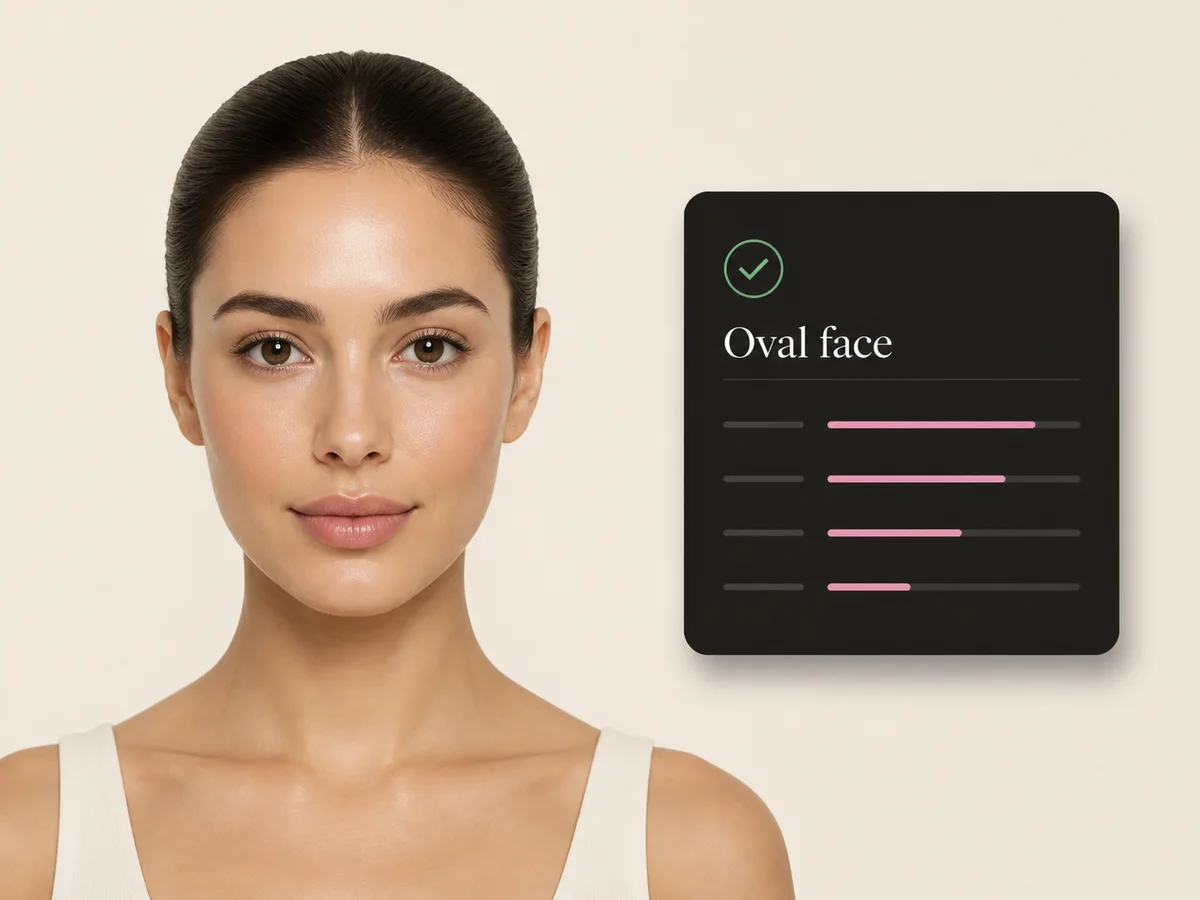
Face shape is not decided by one feature. A strong jaw does not automatically mean a square face, and full cheeks do not automatically mean a round face. The useful question is how the major widths of the face relate to its overall length. You can compare those relationships yourself or begin with the free Face Shape Detector.
Start with a suitable photo
Use a front-facing photo with the camera near eye level. Keep your full forehead, cheekbones, jaw, and chin visible. Pull long hair away from the sides of the face when possible, and avoid wide-angle selfies taken very close to the camera. A neutral expression is easiest to compare because a large smile can temporarily widen the cheeks and change the jaw outline.
The goal is not a studio portrait. Even lighting, a centered face, and minimal head tilt matter more than makeup, clothing, or background.
Compare four facial measurements
Face length
Face length runs from the top of the visible forehead to the bottom of the chin. Compare it with cheekbone width. A face that is clearly longer than it is wide is more likely to fall into oval or oblong territory; a face whose length and width are closer may be round or square.
Cheekbone width
Look for the widest horizontal point around the upper cheeks. Prominent cheekbones may be the widest area in oval, round, or diamond faces. The forehead and jaw then help separate those possibilities.
Forehead width
Compare the temples with the cheekbones and jaw. A forehead that is wider than the lower face, combined with a narrowing chin, often points toward a heart-shaped face. A narrower forehead paired with prominent cheekbones may suggest a diamond face.
Jawline width and contour
Look at both width and shape. A jaw that is close to the forehead and cheekbones in width, with defined angles, is associated with a square face. A jaw that is wider than the upper face can suggest a triangle face. A gently tapered jaw is common in oval faces.
How the seven common face shapes differ
- Oval: longer than wide, cheekbones often widest, forehead and jaw balanced, gently tapered chin.
- Round: length and width relatively close, soft jaw, fuller cheek area, limited angularity.
- Square: similar forehead, cheekbone, and jaw widths, with a broad or angular jaw.
- Heart: wider upper face that narrows toward a smaller or more pointed chin.
- Oblong: noticeably long proportions with straighter sides and less taper than an oval face.
- Diamond: cheekbones clearly widest, with both forehead and jaw narrower.
- Triangle: lower face and jaw wider than the forehead or cheekbones.
Many people sit between two categories. A result such as “oval leaning oblong” is often more useful than forcing every face into a perfect box.
Why photo-based results can change
Camera distance, focal length, head tilt, lighting, hairstyle, and expression all affect the visible outline. A close selfie can enlarge the center of the face, while a camera placed below eye level can make the jaw appear broader. If two photos produce different answers, retake the image under neutral conditions before assuming the underlying proportions changed.
The detector uses facial landmarks and relative ratios, but it still analyzes the photo you provide. It is a styling reference, not a biometric identity system or medical measurement.
Use the result as a starting point
Face shape can help organize ideas for hairstyles, glasses, makeup placement, or facial hair, but it should not become a rule. Texture, personal style, comfort, and individual features matter just as much.
If you want to examine related features separately, try the Eye Shape Detector or Nose Shape Analyzer. For the most consistent comparison, use the same clear, front-facing photo across the tools.